

Research:
Our research combines synthetic organic chemistry, computational chemistry, biology, and pharmacology to uncover potentially active heterocyclic molecules towards dipeptidyl peptidase 4 (DPP4).
Synthetic studies:
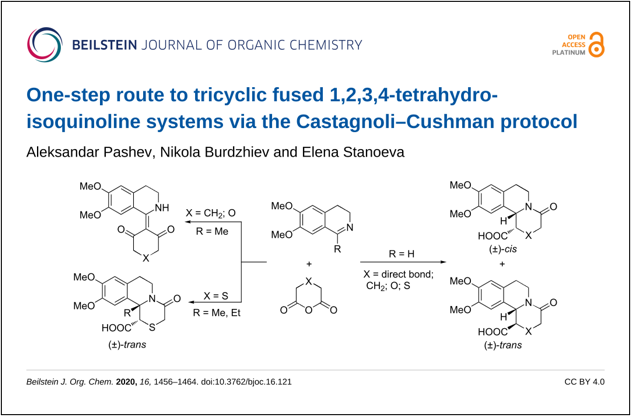
Our group is focused on the development of methods for the stereoselective synthesis of nitrogen-containing polycyclic heterocyclic compounds. The preparation of the target compounds is based on reactions between CH-acidic cyclic anhydrides and compounds containing C=N double bonds. The developed synthetic methodologies enable the one-step construction of polyfunctional heterocyclic compounds. Catalytic approaches for carrying out the developed synthetic procedures are also being investigated. Applying peptide synthesis techniques, we synthesize amide derivatives of the parent compounds being tested for improved pharmacological profile toward DPP 4.
Biological studies:
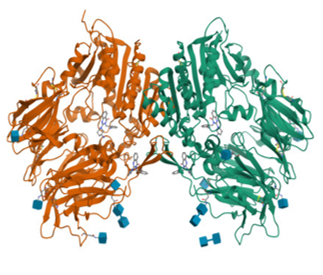
Type 2 diabetes mellitus (T2DM) is a chronic, progressive disease characterized by beta-cell dysfunction and insulin resistance, leading to hyperglycemia and a high risk of complications. The prevalence of this disease is increasing worldwide, resulting in significant socio-economic impact, which underscores the need for effective, safe, and long-term sustainable therapeutic strategies. The efforts of our teams from the Departments of Chemistry and Biochemistry, Pharmacology and Toxicology, and the Biology Section, focus on the development of new DPP-IV inhibitors based on pyrido[2,1-a]isoquinoline structures. Our research in the field of DPP-IV inhibition, discovered previously undescribed molecules inhibiting the enzyme in the micromolar range. We perform structural modifications of the obtained molecules to enhance their selectivity and inhibitory activity toward DPP-IV, as well as to improve their pharmacological profile. A part of our work is the in silico modeling within the active sites of DPP-IV, DPP-8, and DPP-9. This will help not only to improve the inhibitory potential of the compounds but also to increase their selectivity toward DPP-IV compared to other dipeptidyl peptidases, which are often responsible for adverse drug reactions. The in vitro studies include evaluation for affinity, toxicity, membrane permeability, and prediction of their pharmacokinetic behavior.
We are on the run of a long-term and promising line of research with direct contributions to the fields of organic synthesis, pharmaceutical chemistry, and pharmacology, serving as a basis for future, more in-depth in vivo studies.
Lab members:
- Assoc. Prof. Aleksandar Pashev -
This email address is being protected from spambots. You need JavaScript enabled to view it. ; - Teodora Aleksandrova – researcher R1;
- Aleksandrina Pesheva – researcher R1;
- Valentin Petrov – researcher R1;
- Elena Todorova – student;
- Sofia Mladenova – student;
- Atanaska Bozhinova – chemist;
- Tsvetelina Georgieva – laboratory technician
Projects:
- In vitro Activity of Newly Synthesized Benzo[a]quinolizidine Derivatives as Potential DPP-IV Inhibitors, funded by the Medical University of Pleven, Project No. 10/2022;
- Synthesis and Photophysical Properties of Novel Styryl Cyanine Dyes as Fluorescent Markers for Biological Objects, funded by the Medical University of Pleven, Project No. 11/2024;
- BG-RRP-2.004-0003-C01, Med for Health of Medical university – Pleven;
- BG16RFPR002 1.014 0002 C001, “Center of Competence in Personalized Medicine, 3D and Telemedicine, Robotic Assisted and Minimally Invasive Surgery”
Publications:
- Pashev, A.S.; Burdzhiev, N.T.; Stanoeva, E.R. Synthetic Approaches toward the Benzo[a]quinolizidine System. A Review. Prep. Proced. Int. 2016, 48, 425-467, doi:10.1080/00304948.2016.1234820;
- Pashev, A.; Burdzhiev, N.; Stanoeva, E. One-step route to tricyclic fused 1,2,3,4-tetrahydroisoquinoline systems via the Castagnoli–Cushman protocol. Beilstein J. Org. Chem. 2020, 16, 1456-1464, doi:10.3762/bjoc.16.121;
- Pashev, A.; Burdzhiev, N.; Stanoeva, E. Novel Angularly Substituted [1,4]thiazino[3,4-a]isoquinoline Carboxylic Acids Prepared By Cyclic Imine-Cyclic Anhydride Reaction. Heterocycl. Chem. 2023, 60, 513-518, doi:10.1002/jhet.4601;
- Pashev, A.; Petrov, V.; Pesheva, A.; Petrova, L.; Ilieva, K.; Stavreva, G.; Atanasova, M.; Cheshmedzhieva, D.; Altankov, G.; Aleksandrova, T. Angular-Substituted [1,4]Thiazino[3,4-a]Isoquinolines: Biological Evaluation and In Silico Studies on DPP-IV Inhibition. Int J Mol Sci 2024, 25, 11753, doi:10.3390/ijms252111753;
- Petrov, V.; Aleksandrova, T.; Pashev, A. 9,10-Dimethoxy-4-oxo-1-phenyl-1,3,4,6,7,11b-hexahydro-[1,4]thiazino[3,4-a]isoquinoline-1-carboxylic Acid. Molbank 2025, 2025, M1955, doi:10.3390/M1955;
- Petrov, V.; Aleksandrova, T.; Pashev, A. Synthetic Approaches to Novel DPP-IV Inhibitors—A Literature Review. Molecules 2025, 30, 1043;
- Aleksandrova, T.; Pashev, A.; Ilieva, S.; Gargallo, R.; Cheshmedzhieva, D.; Vasilev, A. PET-Driven Fluorescence Modulation in Halochromic Styryl Hemicyanine Dyes Targeting DNA Minor Groove. Molecules (Basel, Switzerland) 2025, 30, 4607, doi:10.3390/molecules30234607;
- Aleksandrova, T.; Pashev, A.; Cheshmedzhieva, D.; Vasilev, A. Styryl hemicyanine dyes with benzo[d]thiazolium and substituted N-phenylpiperazine end groups binding biological macromolecules. Pharmacia 2026, 73, e201020